Complex Post-Traumatic Stress Disorder: Life in Pieces – or: I’m Well Enough to Tend the Garden.
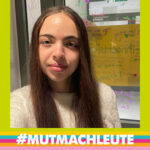
Dear Melanie, some time ago, you shared your story as a #Mutmachleute ambassador. You can read your contribution here. We’d now like to know how things have been for you since then.
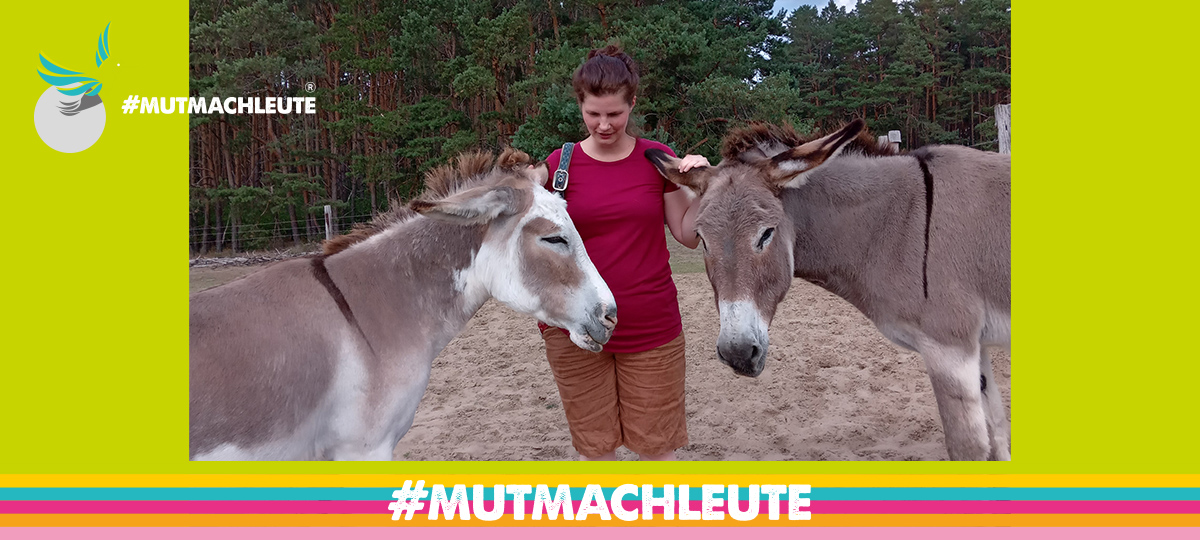
Person affected: Melanie
How are you doing today?
I’m doing reasonably well today. After many ups and downs, many things falling apart and being put back together again, I’ve learned to live well in the present with my condition and the limitations it brings. Not everything is good, but not everything in my life is bad anymore either. In fact, I’ve managed to build a life that supports me rather than constantly falling apart.
I often like to use the example of Kintsugi: the Japanese art of repairing broken pottery and embellishing the cracks with gold. The breaks remain visible, but they are presented in a different way and take on a new meaning.
I’ve once again managed to change my career direction and develop professionally, independently of the social welfare system. Standing on my own two feet, financing something of my own and building a life outside the system were things I couldn’t have imagined many years ago. It took almost 20 years …
Did you receive any feedback on your contribution to #Mutmachleute? What made you happiest?
No, I didn’t receive any reactions to it at the time.
What made me happiest, though, was finding the courage to show myself back then. For someone like me, who had to hide for such a long time, that was a huge step.
What has changed for the better since you started being more open about your condition?
I’ve learned to deal with both sides of being open. There have been situations in which my openness has also had negative consequences. At the same time, I had to realise just how little people actually know about mental health conditions. In this respect, I was sometimes a little naïve myself. Many people have their own ideas and assumptions, but when it comes to complex post-traumatic stress disorder (CPTSD), there is still a great deal of misunderstanding. Social media sometimes reinforces this even further. Very few people actually understand what lies behind this condition and its symptoms.
As a result, I also lost some relationships and first had to learn how to communicate in new ways. Today, I take greater responsibility for myself. I rarely name my diagnosis anymore. Instead, I’m learning to talk more about what I need and where my boundaries lie. The programme “Standing Tall in Dignity” (In Würde zu sich stehen) has helped me enormously, as have initiatives run by and for people with lived experience. Eventually, I was able to accept this support, which made me feel less alone. Today, I work with this programme myself, particularly with children, adolescents and young adults.
What do you hope for in your personal future?
I hope to keep my life as stable as it is today and continue to strengthen that stability. I still experience symptoms, but they are no longer as severe as they used to be and they subside more quickly. I am very grateful for that.
I’ve managed to build a professional life and a personal life as Melanie. Both come with limitations, but nevertheless, I’ve created something I could never have imagined possible in the past.
My personal wish for the future is to hold on to this life, continue to strengthen it and build on what I’ve achieved.
Ähnliche Artikel
Depression and Post-Traumatic Stress Disorder (PTSD): You Are Not Alone.
Anorexia, PTSD, Dissociative Disorder, Depression: I Will Keep Fighting, Even When It's Not Easy!

It Doesn't Have to Be Too Late to Deserve the Right to Help!