
Bipolar Disorder: I’ve Already Overcome So Much, and I’ve Been – and Still Am – So Brave!
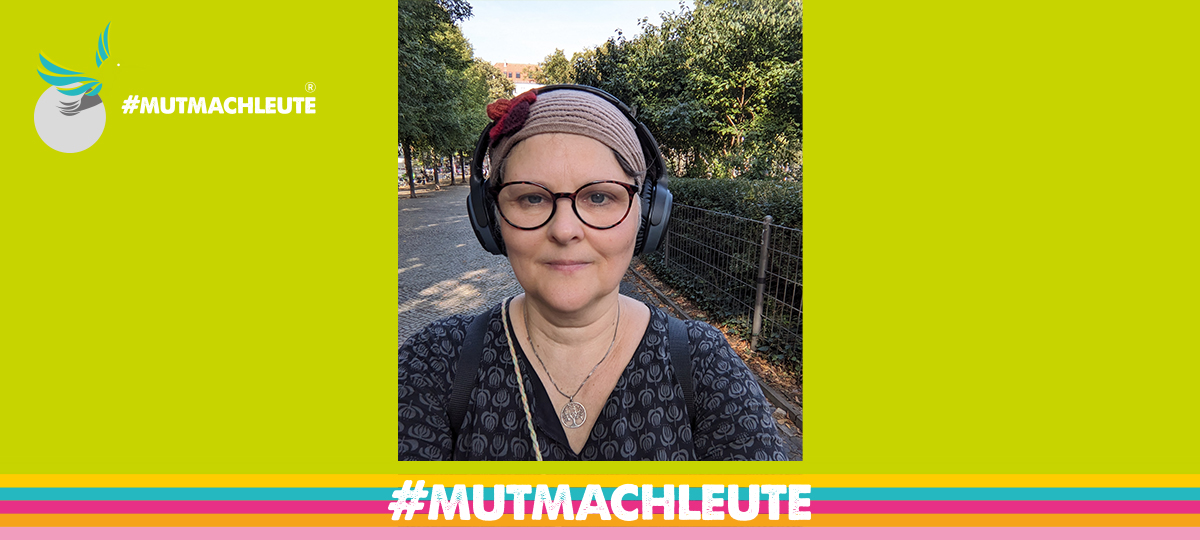
Person affected: Ines Beckmann
Year of birth: 1973
Diagnosis: Bipolar II disorder
Treatment: Cognitive behavioural therapy, day clinic treatment
Personal resources: My husband, my children, my creativity, singing and dancing, nature
How and when did you find out about your condition?
The first time I experienced a depressive episode was in April 2013. At the time, Life900 (highly concentrated St. John’s wort) and cognitive behavioural therapy helped me feel better again relatively quickly.
Then, in autumn 2021, I had to take cortisone for three weeks because of an inflammation in my upper arm. This triggered a manic episode, which was an extremely intense experience for me. The episode lasted around three to four weeks and was then followed by a severe depressive episode. As a result, I was no longer able to work in my profession as a childminder.
At the end of February 2022, I went to the psychiatric outpatient clinic (PIA) for the first time, where I was started on medication. Unfortunately, the first medication triggered severe anxiety, so we quickly switched to another one.
After that, hypomanic and depressive episodes alternated, although in recent years the depressive episodes have become increasingly prolonged. The longest depressive episode lasted one year and two months, whereas the hypomanic phase lasted around six months.
Why did you decide to share your story and show your face now?
I’ve realised how little people still know about depression and bipolar disorder. I want to give others courage and show that it’s worth fighting, daring to open up and sharing your story – also because it helps you realise that you’re not alone. I’ve also noticed how much more secure I feel when I know more about my own condition.
How did the people around you react when they found out about your condition, and how would you like your friends, family and society to approach your illness?
My closest and dearest friends, as well as my husband, reacted with concern, care and understanding.
At work, things weren’t quite so easy for my colleague, as she initially had to carry the entire workload on her own. It was therefore more difficult for her to understand my personal situation.
I would like the people around me to ask what I need to continue feeling well, to be considerate and mindful, and not to overwhelm me with all their own issues.
During the time when I was struggling and withdrawing from others, I would have really appreciated receiving more messages saying: “I’m thinking of you.” Unfortunately, very few people reached out, which made me sad and left me feeling alone.
What has helped you most in coming to terms with your condition?
First of all, I needed to understand what the word depression really meant. The podcast by Kurt Krömer actually helped me a lot, as did a book, poems and reflections by Clare Louise, who has personal experience of the condition herself.
Learning as much as possible about it and being open about it have also helped me enormously. Simply saying out loud: I have depression.
What resources do you turn to in times of crisis?
This is difficult. I tend to withdraw completely quite quickly, to the point where I stop going outside altogether.
I haven’t yet managed to create and put a crisis plan into practice.
In a way, I just endure it and hope for the time when things will get better again and I will be able to get back on my feet.
What would you like to say to others who are affected by mental health conditions?
When you connect with other people who are going through something similar, you begin to realise: “I’m not alone. Many other people feel the same way I do.”
It’s worth being brave and opening up.
What would you like to say to family members and friends of people affected by mental health conditions? How can they best support you while also looking after themselves?
Be patient with this condition. Simply be there for the person who needs you. Talk to them and ask, without placing any expectations on them, what you can do and what they need to get through this difficult time.
What defines your personality, and which personal quality do you value most about yourself?
It’s my sensitivity, my ability to notice the little things, my gratitude for life and my strong sense of justice.
You can find Ines on Instagram: @Colors_of_Live25 and #Jaldafilz