
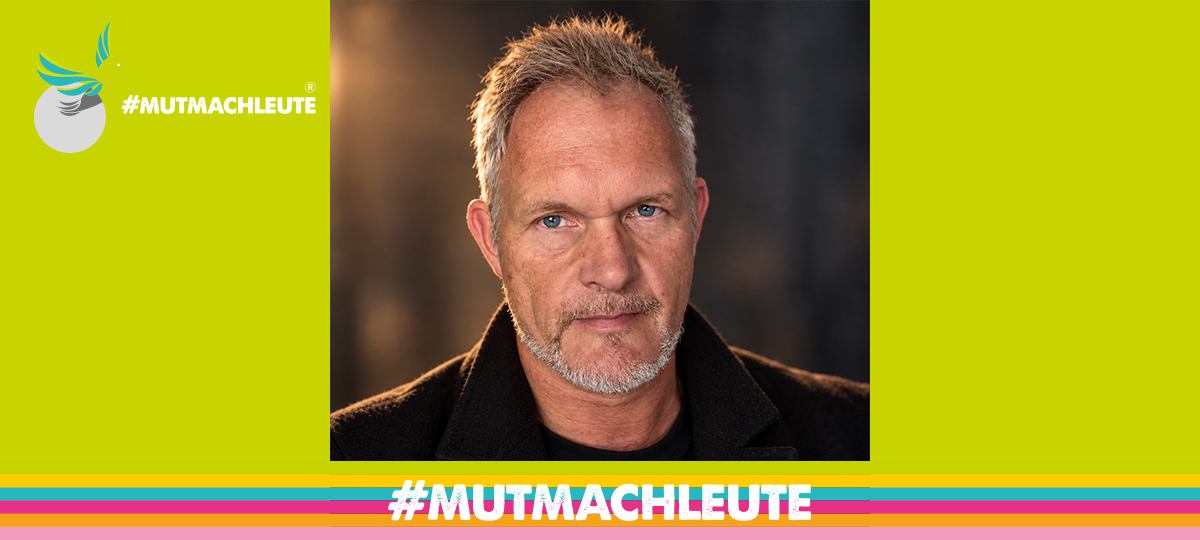
Depression: Keep on fighting!
Name: Sven
Year of birth: 1974
Diagnosis: Recurrent depressive episodes (since 2015)
Treatment: Day clinic treatment, inpatient hospital stays, rehabilitation, cognitive behavioural therapy and psychiatric care
Personal resources: Music, songwriting and astrophotography
How and when did you find out about your condition?
After the birth of my daughter in 2012, I increasingly felt that I was losing myself. I wanted to be there for my family while also living up to the expectations I had of myself at work. What remained was exhaustion and feelings of guilt.
In 2015, I went to see a psychiatrist because I suspected I was suffering from burnout. After discussing my life story, including my mother’s depression, he diagnosed me with a depressive episode. Finally, what was happening to me had a name. I was told that I would have to learn to live with it. At the time, that offered little comfort. Today, I understand what that meant.
Why did you decide to share your story and show your face now?
Because depression is often invisible. We can laugh, work and appear happy on the outside while feeling completely different inside. I’m not looking for sympathy. Perhaps someone will recognise themselves in my story – or a family member will understand a little more afterwards.
How did the people around you react, and how would you like them to approach your condition?
Anyone who has never experienced depression themselves may find it difficult to understand many aspects of it. I understand that. Nevertheless, I sometimes wish people were more willing to listen. I don’t need ready-made solutions. Sometimes I need closeness, sometimes I need peace and quiet – but I always need to know that someone is there for me.
What has helped you most in coming to terms with your condition?
Hospital stays and therapy have helped me recognise my condition and its warning signs. When I later started experiencing suicidal thoughts again, I realised that I could no longer trust myself at that moment. That’s why I made the decision to return to hospital voluntarily.
Even today, there are days when I feel that I’m nothing but a burden. But I’ve learned that my depression can make thoughts feel like truths when they aren’t necessarily true. The feelings are real. But the message they seem to convey isn’t always.
What resources do you turn to in times of crisis?
Music has been part of my life since I was twelve. Depeche Mode, in particular, and the lyrics written by Martin Gore have had a profound influence on me. When I don’t have the energy to write songs myself, other people’s music carries me through. During better phases, I’m able to translate my feelings into songs of my own.
And then there’s astrophotography. Sometimes it takes a tremendous effort just to pack up my equipment at night and head out. But once my telescope is set up and my camera is observing the sky, suddenly nothing is expected of me. I don’t have to achieve anything or prove anything to anyone. I can simply be.
Under the stars, I sometimes feel as though I’m in a vast space filled with people who are silently saying: We understand you. You are allowed to be here just as you are. While I wait, galaxies and nebulae slowly emerge in my photographs – things my eyes alone could never see. It gives me a profound sense of peace.
My camera makes visible what the eye cannot see. Through my music, I try to make audible what no one can see inside me.
What would you like to say to others who are affected by mental health conditions?
One of my most devastating experiences was no longer being able to feel love – neither the love of my family nor my own love for my wife and children. My mind knew that the love was there. But I couldn’t feel it. It almost drove me to despair.
So here’s what I’d like to say: Trust what you know, even when your feelings tell you something different.
Just because you can’t feel something doesn’t mean it doesn’t exist.
Accept help. You don’t have to walk this path alone.
Keep on fighting.
What would you like to say to family members and friends of people affected by mental health conditions?
My daughter had to witness one of the most difficult periods of my life. Even though I knew that I wasn’t to blame for my illness, I judged myself harshly for it. The clinic arranged for us to speak to a child psychologist and connected us with other children affected by a parent’s mental health condition. That really helped. Family members need support, too.
Above all: Please look after us.
Depression doesn’t disappear just because someone starts smiling again. No one can always tell what’s going on inside another person. Keep talking to us, take warning signs seriously and show us that we are needed and loved.
Sometimes we can no longer feel that ourselves.
What defines your personality, and which personal quality do you value most about yourself?
My empathy. I believe I’ve always been sensitive to other people’s feelings. Depression may have made that even stronger. I try not to judge people too quickly.
Everyone carries a story within them that others cannot see.
Make sure to visit Sven’s website: 51milesaway.com
Ähnliche Artikel

Looking Back, Moving Forward! – I Turn My Past into Strength for What Lies Ahead!

Depression and Panic Disorder: Things Do Get Better. The Road to Recovery Is Difficult, but Things W...

Depression: Depression is an illness, not a character flaw, a weakness or a reason for prejudice.

Borderline Personality Disorder, Social Anxiety Disorder and Depression: I Am More Than a Code on Pa...