
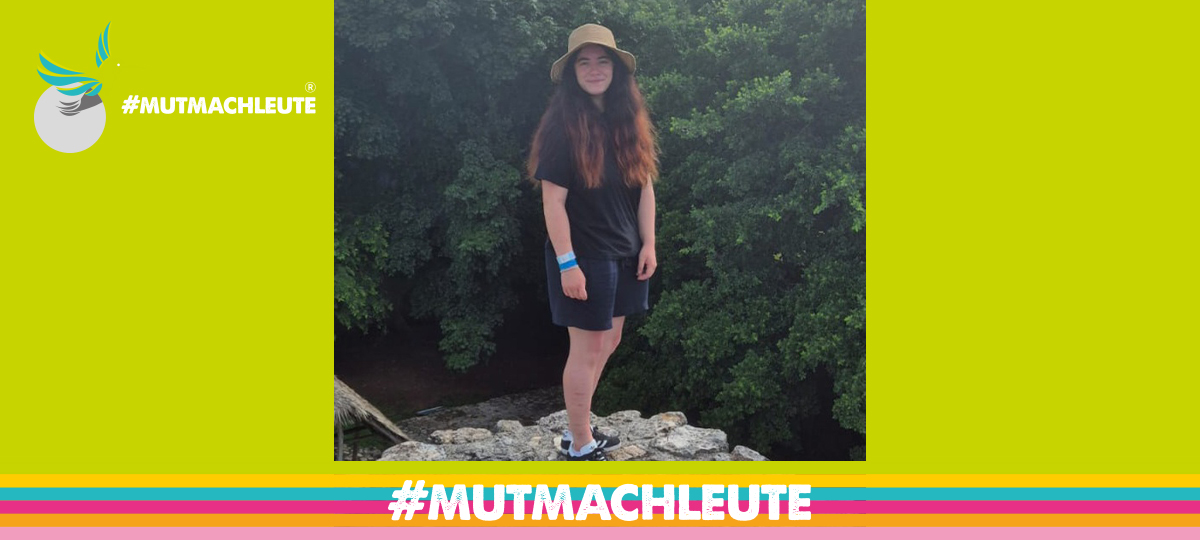
Borderline Personality Disorder, Social Anxiety Disorder and Depression: I Am More Than a Code on Paper.
Person affected: Finja
Year of birth: 2006
Diagnoses: Borderline personality disorder, social anxiety disorder, depression
Treatment: Several inpatient psychiatric stays, outpatient psychotherapy
Personal resources: Creative writing, going for walks, friends, family
How and when did you find out about your condition?
I’ve always been a very emotional and anxious person. Things really started to become noticeable in 2020/21. That period was the darkest chapter of my life. Fortunately, I had people around me who helped me get treatment.
After going through many different therapies, I finally received a name for what had always been with me internally. Since then, I’ve been able to work on myself more purposefully and build a good life.
Why did you decide to share your story and show your face now?
Over the past few years, I’ve experienced firsthand how cruel stigma and prejudice surrounding mental health conditions can be. They strike right at the heart of those affected and spread like poison. That’s why it’s incredibly important to me to become visible, speak out and take action to help change society.
I was deliberately faced with obstacles. And my path was already full of enormous mountains to climb.
Instead of bringing each other down, I wish we would reach out to one another more often and help each other grow through life’s challenges.
How did the people around you react when they found out about your condition, and how would you like your friends, family and society to approach your illness?
The people around me were quite shocked and initially unsure about how to treat me. I lost friends and family members who struggled to deal with my situation.
But I also found at least as many new friends and strengthened my relationships with the family members who remained, who appreciate and support me.
My greatest wish is for a society that talks openly about mental health conditions and embraces inclusion.
We are more than a code in the ICD-10, more than the prejudices and stigma surrounding us.
We are human beings.
What has helped you most in coming to terms with your condition?
Psychotherapy has helped me, and continues to help me, understand and accept my conditions. At first, it was difficult and felt like getting to know myself all over again.
At the clinic, I met people for the first time who had experienced similar hardships and shared similar thoughts and feelings. Together, we learned how to overcome these challenges.
That’s where I learned:
It’s okay not to be okay sometimes!
Everyone has their own struggles to deal with.
What resources do you turn to in times of crisis?
When darkness reaches out for me, I grab a blank page and fill it with words. In this safe haven I’ve created, most of the storms begin to settle. I also listen to music, use coping skills I’ve learned in therapy or go for a walk.
Sometimes my friends and family also act like little fireflies in pitch-black nights, helping me find my way. I also try to focus on the positive aspects and happy memories in my life.
What would you like to say to others who are affected by mental health conditions?
Never give up, even when everything seems hopeless! Seek help when the weight on your shoulders becomes too heavy for one person to carry alone. It’s tough, it’s difficult and it takes a lot of courage to take that step, but every step towards recovery is absolutely worth it!
You are never alone!
There are people in this world just like you, who share similar experiences, fight every day and have to learn to live a new life alongside their condition.
Everyone has their own pace, because each and every one of us is unique.
And we all deserve a life worth living!
So don’t let other people’s boundaries and definitions become your own limitations!
What would you like to say to family members and friends of people affected by mental health conditions? How can they best support you while also looking after themselves?
Don’t be too hard on us or on yourselves! We’re all living this life for the first time.
We really appreciate your support and the fact that you meet us where we are at any given moment.
Educate yourselves about the condition, seek advice and don’t hesitate to get professional support yourselves.
After all, you can only give to others when you have enough reserves of your own!
Communication and treating each other with mutual respect and as equals are absolutely essential!
It won’t always be easy, but with a lot of effort, there will also be incredibly valuable and beautiful moments along the journey towards recovery. We will grow together and become stronger than ever!
Thank you to all the family members and loved ones who are our silent superheroes in the background, always having our backs and giving us strength! You are amazing!
What defines your personality, and which personal quality do you value most about yourself?
I’m an introverted night owl who loves spending time in nature. Because I love travelling, I’m always up for an adventure, but I also appreciate peaceful quiet moments.
I’m also a stubborn fighter who never gives up and makes her dreams come true.
The qualities I value most about myself are my empathy, emotional depth and resilience. They make my life truly worth living!
Ähnliche Artikel

Looking Back, Moving Forward! – I Turn My Past into Strength for What Lies Ahead!

Depression: Keep on fighting!

Depression and Panic Disorder: Things Do Get Better. The Road to Recovery Is Difficult, but Things W...

Depression: Depression is an illness, not a character flaw, a weakness or a reason for prejudice.