
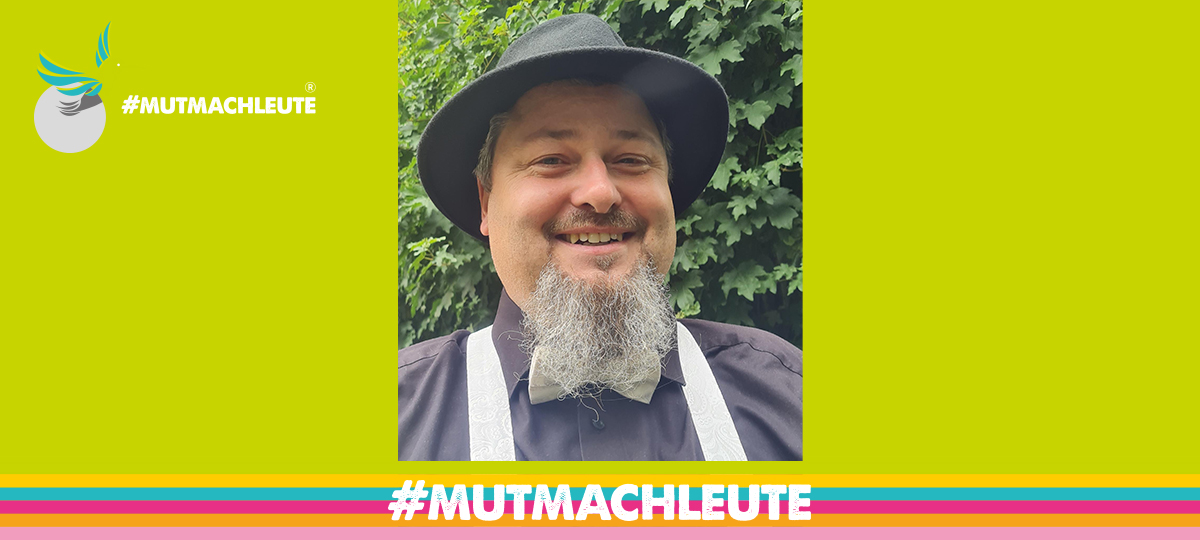
Depression and Post-Traumatic Stress Disorder (PTSD): You Are Not Alone.
Person affected: Björn Rolke
Year of birth: 1978
Diagnoses: Recurrent depression and post-traumatic stress disorder (PTSD)
Treatment: Talk therapy, psychodynamic psychotherapy, one inpatient stay at KBO Taufkirchen (Vils), and several rehabilitation programmes, including a specialist trauma clinic in Bad Saulgau. Since July 2026, I have been taking part in a vocational retraining programme at BFW Kirchseeon.
Personal resources: Playing games (board games, PC games, D&D and much more), crocheting, music, singing in a choir, cycling
How and when did you find out about your illness?
The first time I sensed that something wasn’t quite right was in primary school, when my friends talked about their families. That’s when I realised that violence and excessive drinking were not part of a normal family life.
But I didn’t actually receive my diagnoses until 2004, when our first child was born. My parents were behaving in their usual intrusive and inappropriate way, but I wasn’t fully aware of it at the time.
Suddenly, my aunt, my father’s sister, whom I had barely been in contact with until then, got in touch and said she had something important to tell me. That’s when I first heard about the allegations of sexual abuse against my father. The terrible thing was that I could actually imagine it happening. After all, I had experienced what he could be like when alcohol was involved: violent, cruel, loud and destructive.
From that moment on, it was clear that my parents would only be allowed to see their grandchildren if accompanied by someone else. And that’s when the drama began …
I experienced my first depressive episode, accompanied by sometimes severe anxiety and panic attacks. I was unable to work for six weeks, was diagnosed with PTSD and depression, started medication and carried on with my life.
Why have you decided to show your face and share your story?
For myself and for everyone else.
For a long time, I thought I was an alien, that I was the one with something terribly wrong with him. But then, for the first time, I went to a psychosomatic rehabilitation clinic and realised: There are many of us, and I’m not alone. There are people who understand me, and that helped me so much.
Since then, I have experienced a severe episode that completely knocked me out of my life. I was ill for two years and spent several months as an inpatient during that time (in psychiatric hospitals and a specialist trauma clinic). The whole environment there, the therapies, the doctors and psychologists, and even the physical activities helped me enormously. But most of all, I was helped by the other patients – other people who shared their stories with me and allowed me to share mine with them.
You are not alone.
How did the people around you react when they found out about your illness, and how would you like them (and society as a whole) to approach your condition?
Well, I’ve always been open about my condition. My family knew about it (even though the perpetrators in my family could never accept it: “It wasn’t that bad.” “You were so young.” “You probably can’t even remember.”), my friends knew, and my managers at work were informed, too.
The reaction was usually something along the lines of: “Really? You’d never know.”
Surprise! My mask was working – and I kept functioning right up until the very end.
I wish mental illnesses would finally be taken seriously, both by the people affected themselves and, above all, by those around them and by society as a whole. It’s hard to imagine how often I’ve experienced bullying in the workplace. Unfortunately, during my own period of illness, I discovered that this is far from an isolated experience. On the contrary, many people with mental health conditions face disrespect and bullying, both in society and at work.
It would also be important for politicians to stop going around in circles and finally start making policies for people. And that includes people with (mental) illnesses. What kind of message does it send when there are already far too few therapy places available, yet therapists face a 4.5% cut in their fees, or when savings are made across the healthcare and social welfare systems? Children, young people, people with disabilities and many others end up paying the price. At the same time, we give away taxpayers’ money to the super-rich, who already have everything.
Something is seriously wrong here!
What has helped you most in accepting your illness?
The illness itself. It beat me out of my life with brutal force. I suffered a complete breakdown, and somehow I knew at that point that if I didn’t seek help now, it would be too late.
I was so exhausted that, at first, all I really did in the clinic was sleep and cry. And I simply couldn’t let go. I was still convinced that I had to keep functioning: “Next week, everything will be fine again. I’ll go back to work and everything will be okay.”
But what I thought would be a short illness turned into more than two years before I was back on my feet and stable again. Now I’m starting over with vocational retraining because my previous profession triggers too much for me.
What personal resources do you draw on in times of crisis?
Walking, usually. I go out walking. It’s not easy because the illness makes my bones and muscles feel as heavy as lead. But I can literally walk away from my symptoms. The brain can’t stay trapped in depression or endless thought loops when you’re walking.
When things are really bad, it takes a good half an hour before the thoughts stop shouting at me. But then there’s peace. Just walking, preferably with an audiobook or podcast, although sometimes even that is too much for me.
Generally, anything that keeps my hands (and my body) busy helps me. I also have a spiky massage ball and various essential oils that help me, including with sleep. And if nothing else works, I have emergency medication or call the crisis support service. Sometimes it already helps just knowing that someone is there.
What would you like to tell other people affected by mental illness?
Don’t wait until you can’t go on anymore. Get help at the first signs. You are not alone. We will find each other, and we understand one another.
There are people out there who feel what you feel. And perhaps we’re not the ones who are ill. Perhaps we’re simply the first ones who can no longer bear – or no longer want to bear – this kind of cut-throat, performance-driven society.
At any rate, I wish for something different.
What would you like to say to family members and loved ones? How can they best support you while also looking after themselves?
Don’t give up on the people you love. Pay attention to even the smallest signs. Often, the first symptoms are barely visible, but inside, everything is already going up in flames. The mode of functioning and the mask often remain in place right up until the bitter end.
Seek professional help for yourselves and your loved ones, and make sure you don’t go under yourselves in the process. It’s important that you, as family members and loved ones, also seek support and professional help from the very beginning.
An illness like this is not easy – neither for the person affected nor, especially, for their loved ones. Take care of yourselves and involve friends and relatives (provided they are not part of the problem).
What defines your character, and which personal quality do you value most about yourself?
I’m a very empathetic person. I enjoy listening to others and I’m genuinely interested in their stories.
I worked in the social sector for a long time because I wanted to support children and young people who had experienced things similar to what I had been through. That was always my purpose in life, until I was no longer able to do it.
Nevertheless, I still want to make a positive difference in the lives of people around me and support people with and without disabilities or mental health conditions. Above all, I want to continue being visible, sharing my story and helping to break down stigma.
You can find Björn on Instagram: @bjaysbest
Ähnliche Artikel

Looking Back, Moving Forward! – I Turn My Past into Strength for What Lies Ahead!

Depression: Keep on fighting!

Depression and Panic Disorder: Things Do Get Better. The Road to Recovery Is Difficult, but Things W...

Depression: Depression is an illness, not a character flaw, a weakness or a reason for prejudice.