
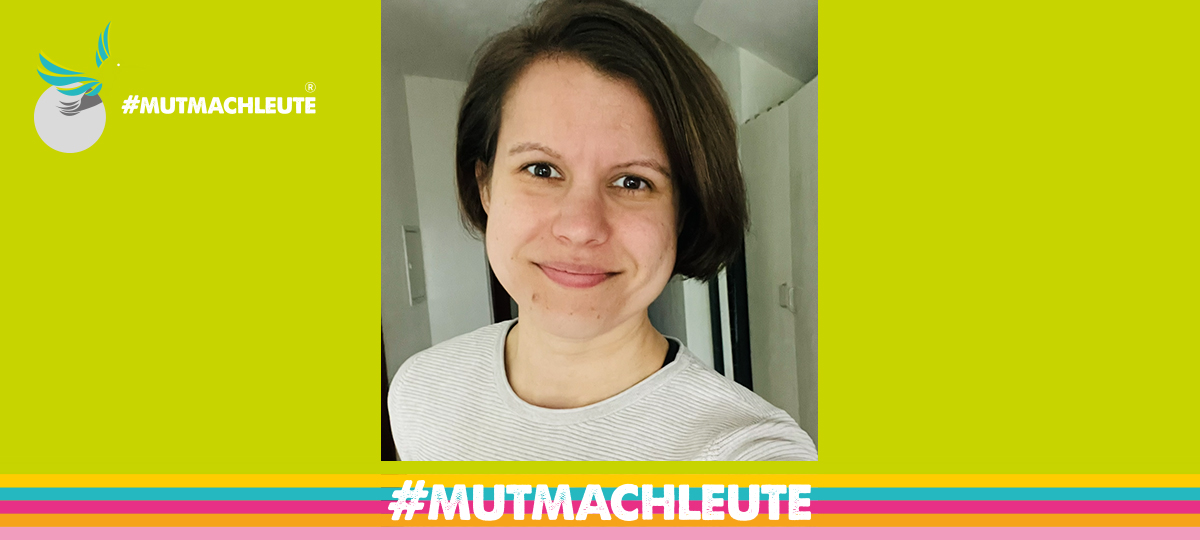
Depression: Depression is an illness, not a character flaw, a weakness or a reason for prejudice.
Person affected: Sabrina Maternus
Year of birth: 1991
Diagnosis: Depression
Treatment: Outpatient psychotherapy, day clinic treatment, medication
Personal resources: Handball, reading, my animals, personal relationships and engaging with topics that matter to me
How and when did you find out about your condition?
Looking back today, the first difficulties probably started during my school years. I was always a very quiet, rather reserved child, although I can’t really say whether that was already related to depression at the time. It certainly became more noticeable during my teenage years, when I was around 16. School became increasingly difficult for me, and even afterwards I struggled for a long time to find my own path. I started different vocational training programmes and degree courses, tried out many things and abandoned some of them along the way.
I eventually worked in nursing for many years, until I reached a point during the COVID-19 pandemic when the exhaustion simply became too overwhelming. Alongside depression, burnout also played a role at that time.
Over the years, I have experienced various therapeutic approaches and spent a long time in outpatient psychotherapy. This year, I finally decided to try treatment at a day clinic, although I was quite sceptical about it at first. I was all the more surprised by how much I was able to take away from that experience.
The work with my therapist and gaining a better understanding of my own condition have had a lasting impact on me. I also take medication as part of my treatment.
Why did you decide to share your story and show your face now?
Because I hope that one day mental health conditions will be talked about as openly and naturally as physical illnesses. Although depression affects many people, I keep noticing how little is actually known about it and how quickly people affected are reduced to their diagnosis.
Through my professional work as a lecturer in nursing and care, I already deal extensively with health-related and psychosocial topics. I am also currently studying Public Health and would like to focus more strongly on mental health, awareness-raising and psychiatric care in the long term. My own experiences have certainly contributed to making these topics particularly important to me.
That’s why I don’t want to hide my condition. Instead, I want to turn my experiences into something meaningful. Perhaps I can help other people feel better understood or give them the courage to talk about their own situation.
How did the people around you react when they found out about your condition, and how would you like your friends, family and society to approach your illness?
This is a question that still occupies my thoughts today. Mental health conditions are certainly not unfamiliar in my family, yet even there, it is not always easy for people to understand my depression. Sometimes I feel that my condition receives more attention than what I am actually feeling at that particular moment.
For example, when I feel sad, it is quickly interpreted as a sign of my depression. But sometimes I am simply sad, without my condition necessarily being the reason. This distinction seems obvious to me, but apparently it isn’t always so easy to make in everyday life.
That’s why I would like people to stop constantly looking at those with mental health conditions through the lens of their diagnosis. I’m not expecting the people around me to always get everything right. What matters much more to me is their willingness to listen, ask questions and learn about the condition.
What has helped you most in coming to terms with your condition?
I think an important step for me was to stop seeing my depression solely as something I constantly have to fight against. The treatment at the day clinic, in particular, gave me a different perspective on my condition.
I found psychoeducation especially valuable. This means learning more about how depression develops, which factors influence it and how you can manage it better yourself. Many things that I had previously struggled to understand or make sense of suddenly became clearer.
For me, acceptance doesn’t mean simply putting up with everything. Rather, it’s about taking my condition seriously without defining myself entirely by it. I don’t think this is a process that will ever be completely finished.
What resources do you turn to in times of crisis?
Sport plays an important role for me, especially handball. Being physically active and sharing experiences with others help me get some distance from everyday life and clear my head. I also enjoy reading, spending time with my animals and exploring topics that interest me.
I’ve also realised how important it is for me to feel that I’m doing something meaningful. At the same time, I’m still learning that not every day has to be productive and that it’s perfectly okay to recognise and respect my own limits.
What would you like to say to others who are affected by mental health conditions?
Perhaps, above all, that you shouldn’t constantly measure yourself against how straightforward your life path is. I spent a long time searching for my own direction, questioning decisions and abandoning some plans along the way. Today, I see these detours a little differently, even though that doesn’t mean they were always easy.
I would also encourage everyone to seek support and remain open to different treatment options. Before my treatment at the day clinic, I was sceptical myself and would never have expected to gain so much from the experience.
Depression can have a significant impact on your life, but it doesn’t take away your ability to develop interests, explore new paths or make plans for the future.
What would you like to say to family members and friends of people affected by mental health conditions? How can they best support you while also looking after themselves?
I would like family members and friends to learn more about mental health conditions and, at the same time, remember that behind every diagnosis is a person with very different feelings and needs.
My own family situation has shown me just how difficult things can become when understanding is lacking or behaviours are too quickly attributed to the condition. Not every sad mood is a sign of depression, and not every wish to withdraw means that someone’s mental health is deteriorating again.
This is why supporting family members and friends of people affected by mental health conditions is particularly close to my heart.
I believe that greater awareness and understanding could help us overcome many uncertainties and misunderstandings. At the same time, the challenges and needs of family members and friends should also be taken seriously. After all, it’s not about one side having to get everything right. It’s about starting a conversation and finding a way to understand and support each other.
What defines your personality, and which personal quality do you value most about yourself?
I would describe myself as a rather thoughtful and curious person who enjoys exploring things in depth. When a topic interests me, I want to understand the connections, discover different perspectives and learn as much as possible about it.
It’s important to me that what I do has meaning and purpose. Perhaps that also explains why I focus so strongly on health-related and social issues, both professionally and now in my studies.
What I value about myself is probably my willingness to keep exploring new paths. Not every decision was right, and not every attempt was successful. But I’ve managed to hold on to my curiosity, and I want to keep learning, growing and, wherever possible, making a positive difference in other people’s lives.
You can find Sabrina on Instagram: @sabimat_91
Ähnliche Artikel

Depression: Keep on fighting!

Depression and Panic Disorder: Things Do Get Better. The Road to Recovery Is Difficult, but Things W...

Borderline Personality Disorder, Social Anxiety Disorder and Depression: I Am More Than a Code on Pa...

Borderline: Borderline is insanely painful, but my empathy is almost limitless.